
India's GDP estimates for 2020-21 show that the economy is expected to perform much better than earlier projections by different agencies, indicating a sustained V-shape post-lockdown recovery, experts said. The first Advance Estimates (AE) by the National Statistics Office (NSO) has projected a contraction of 7.7 per cent in the real GDP during 2020-21. This was better than the projections by certain international agencies like the IMF and World Bank.

SBI was the biggest loser in the Sensex pack, shedding 2.40 per cent, followed by Yes Bank, Bharti Airtel, L&T, Sun Pharma, M&M, ICICI Bank, ONGC, RIL, Asian Paints, Vedanta and HUL, which lost up to 2.37 per cent.
Arguing that the recent elevation in retail inflation is not structural but supply-driven and therefore potentially transitory, a foreign brokerage report has forecast that the benign interest rate regime will continue at least until next June. The assessment comes a day ahead of the third bimonthly monetary policy review on Friday wherein it's widely expected that the monetary authority will leave the key rates unchanged at 4 per cent even though the consumer prices have been on remaining above 6 per cent since May and crude prices have been north of $70 a barrel for months.

Analysts welcomed the better Q2 GDP readings of 4.8 per cent, which came in above their expectations, but warned that the planned expenditure cuts by the government will be the key thing to watch out going forward.

The WPI has been in the negative zone since November.

A month-long national lockdown to arrest the spread of COVID 2.0 could shave off 100-200 bps of GDP, leading to a 300 bps risk to annual growth, a brokerage report has flagged while expressing doubts over the ability of local lockdowns to control the pandemic. The second wave of the coronavirus inflection has caught the government off-guard with the daily cases jumping over 6.5 times in the past 30 days. With close to 3.53 lakh fresh daily infections, the country is the worst hit globally.

The NCEAR has indicated some improvement in the fourth quarter of the current financial year.
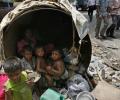
India's rising GDP may have propelled the middle class to become richer, buy new cars, travel around the world and build assets, but it further pushed the economically disadvantaged and poor into poverty and drudgery, says Devanik Saha.
The economy is likely to register a 9.5 per cent growth this fiscal over 7.3 per cent contraction last year, as the ongoing recovery is faster and more credible than earlier foreseen, according to a foreign brokerage report. It will gather more momentum in the second half of the current fiscal, but will slow down to 7.7 per cent next financial year, it added. The government has budgeted for a 10.5 per cent growth this fiscal, but the Reserve Bank has scaled it down to 9.5 per cent.
.jpg)
IT market is forecast to grow 2.8 per cent in dollar terms and 5.1 per cent in constant currency from 2012, Gartner said in a statement.

The agriculture sector has witnessed feeble growth on account of drought for two successive years


The Nifty Bank index has come off 15 per cent from its peak in February, underperforming the benchmark Nifty which is down 6%.

Retail inflation hit an eight-month high of 6.07 per cent in February, remaining above the RBI's comfort level for the second month in a row, while wholesale price-based inflation soared to 13.11 per cent on account of hardening of crude oil and non-food item prices, government data showed on Monday. The previous high for retail inflation was 6.26 per cent in June 2021. The consumer price index (CPI) based retail inflation, which is taken into account by the Reserve Bank of India (RBI) while deciding its monetary policy, rose mainly because of costlier food items, as per the data released by the National Statistical Office (NSO).

In May, Satpal Singh, who runs a dairy business with three buffaloes in Jewar, near Noida, was worried about the steep spike in input costs. Singh said dry fodder rates, which cost Rs 1,500-2000 per tractor trolley last year, were quoting at Rs 4,500-5,000. The price of other cattle feed ingredients (that include mustard meal and similar mixes) had also gone up from Rs 2,000 per quintal to Rs 3,100-3,200 per quintal.
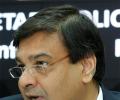
Chetan Ghate, Pami Dua and Ravindra Dholakia have been appointed for 4 years

It came on the back of tepid dispatches in the March quarter as consumer sentiment took a knocking, owing to uncertainty ahead of the general election.

The government kept its nerve in the face of a massive shock. It chose not to resort to a massive fiscal stimulus. It focused instead on providing liquidity support and easing restrictions on movement in stages, observes T T Ram Mohan.
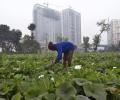
India's latest GDP numbers do not signal robust economic growth in near term.

The G-20 meeting of the Finance Ministers and central bank governors beginning July 19 will also be attended by RBI Governor D Subbarao and Deputy Governor Urjit Patel.

Increasing female economic participation by ensuring equal work opportunities for women and expanding access to education and skills training for female entrepreneurs.

According to Boeing, India would need 1,940 single-aisle planes worth $220 billion and 350 wide-body aircraft valued at $100 billion.

'So, what does one believe -- just 6 stocks that are pushing the indices higher or the 600 scrips that are reflecting economic pain?'

However, the Indian economy is expected to bounce back in 2021, the World Bank said.

Chinese Premier Premier Li Keqiang said world economic recovery should not be driven by mainly China, but in concert with many countries.

After navigating the turbulent pandemic waves, the recovering Indian economy is now sailing through unchartered waters of rising coronavirus cases, spiralling commodity prices and spiking inflation though the lighthouse of sustainable growth remains visible. As 2022 begins, a raft of developments, ranging from Budgetary announcements to continuation of stimulus measures to monetary policy, will set the tone for the domestic economy, which is projected to grow more than 9 per cent in the current fiscal ending March 2022. The country's continuing massive vaccination drive and 'precaution' doses starting for select categories of people this month will provide a firewall against any steep spike in coronavirus cases amid the emergence of the Omicron variant.

Indian equities are no longer cheap vis-a-vis global markets, and only a short distance away from being the most expensive they have ever been.

'This market is very expensive in some pockets, dirt cheap in some, and the belly of the market is reasonably valued.'

A Reserve Bank-authorised survey on Monday lowered the country's economic growth rate projection to 5.7 per cent for the current fiscal, down from 6 per cent estimated earlier.

The Fed has said it wants to be "reasonably confident" in the inflation outlook before a rate hike.
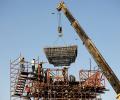
India's economy is unlikely to see double-digit growth and may grow between 8 per cent and 9 per cent this fiscal year (2021-22, or FY22), against the estimated 11.5 per cent, according to leading economists and rating agencies. The downward revision of growth projections to as low as 10 per cent is mostly on account of stringency in restrictions by states, relatively slow vaccination pace, and the possibility of a third wave of the pandemic. However, they say the impact will not be as severe as the first wave, and expect the first quarter to see positive growth.

'At this moment, investors should look for relative value within sectors and clear visibility (third-wave-or-not) on earnings delivery.'

Opinion polls have suggested that while big business is broadly in favour of staying in the EU, small firms have been evenly split in what looks like a photo-finish.

The panel noted that the macro-economic fundamentals of the economy are sound but challenges remain, several of which are structural in nature.

Search is on for reliable indicators of underlying activity.

The estimate is way below the government's forecast of 9 per cent growth in 2011-12.

'We have to stop thinking about GDP and look at the impact on output and unemployment.' 'And that is not going to be insignificant.'
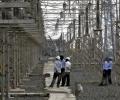
Even as the World Bank has revised India's growth figures by 0.4 percentage points as compared to its January forecast, India remains the fastest growing major economy in the world, the World Bank officials said.
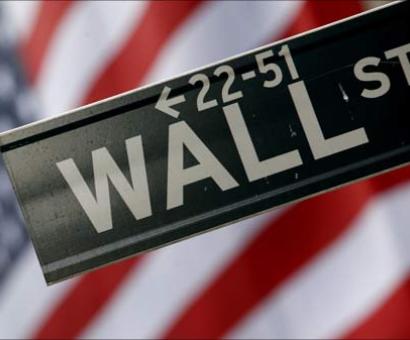
US economy may begin to get back on track in late-2009.

Thirteen companies have joined the Rs 1-trillion-plus market capitalisation club this year, so far. This even as the benchmark Sensex has gained less than 3 per cent on a year-to-date basis, underscoring the bullish undercurrent in the broader market. The trend shows a harsh second wave of Covid-19, subsequent lockdowns, and hit to the economic activity has made little dent into India Inc or shareholders' wealth. At the start of the year, there were 29 companies with a market value of more than Rs 1 trillion.
